Bilingual kids don’t just learn another language, they grow curious, confident, and open to the world. In this blog, discover how bilingualism can be a wonderful gift for your child’s future.
August 29, 2025
5 Minutes
Why Childhood Is the Best Time to Learn a Second Language
Why should a child try to learn a second language while they’re still mastering their first? Surely, a second language would be too much while a child is simultaneously navigating subjects such as math, history, chemistry, and more. However, childhood is a stage when the acquisition of a second language comes most naturally. The acquisition of a second language also helps children learn in other ways.
Children’s brains very easily absorb the sounds, structures, intonation patterns, and rules of a second language. Prior to adolescence, language learners benefit from flexible ear and speech muscles capable of detecting the sounds of a second language and reproducing them to perfection. This is why a child who learns a second language before the end of adolescence will be able to speak the language like a native, without an accent.
Speaking multiple languages stimulates children’s brains in multiple ways
In fact, the cognitive advantages of learning a second language for kids are far-reaching:
Improved memory
speaking multiple languages stimulates children’s brains and trains them to retain information more effectively. In addition, bilingual children learn to assimilate data more effectively than monolingual children. The muscle memory developed from using two languages can also facilitate other learning.
Stronger mental elasticity
Bilingual children process information faster than their monolingual counterparts. By practicing a second language, bilingual children constantly train themselves to juggle words and navigate different situations. In this way, learning a new language as a child helps develop the brain’s flexibility and ability to assess the world from multiple perspectives.
Better problem solving
It has been proven that bilingual children have the ability to solve problems more easily (1). When learning a second language, children must quickly decipher which word to use and in which language to use it. The thought process of bilingual children is therefore faster than that of their monolingual counterparts. Bilingual children are accustomed to getting around speech problems quickly.
Enhanced cognitive skills
Bilingualism in children increases cognitive performance. This enables children greater intellectual flexibility and brain plasticity.
Improved multitasking
Children who speak multiple languages are more likely to carry out several activities at the same time than those who speak only one language. As a result, bilingual children have greater cognitive flexibility because they’re accustomed to switching between two activities.
Providing a child with the opportunity to learn a second language will help them perform at school. Bilingual children develop skills that they can apply in other learnings. They also benefit from having more opportunities in the future. It’s important to remember that a child’s brain is flexible and the skills developed from learning a second language are immeasurable.
Don't missa single post!
Get our latest articles, French learning guides, and free printable resources delivered straight to your inbox. Subscribe for free and support your child's language journey!
Thanks for subscribing!
Oops! Something went wrong while submitting the form.
Latestblog posts
Learning French
12 Minutes
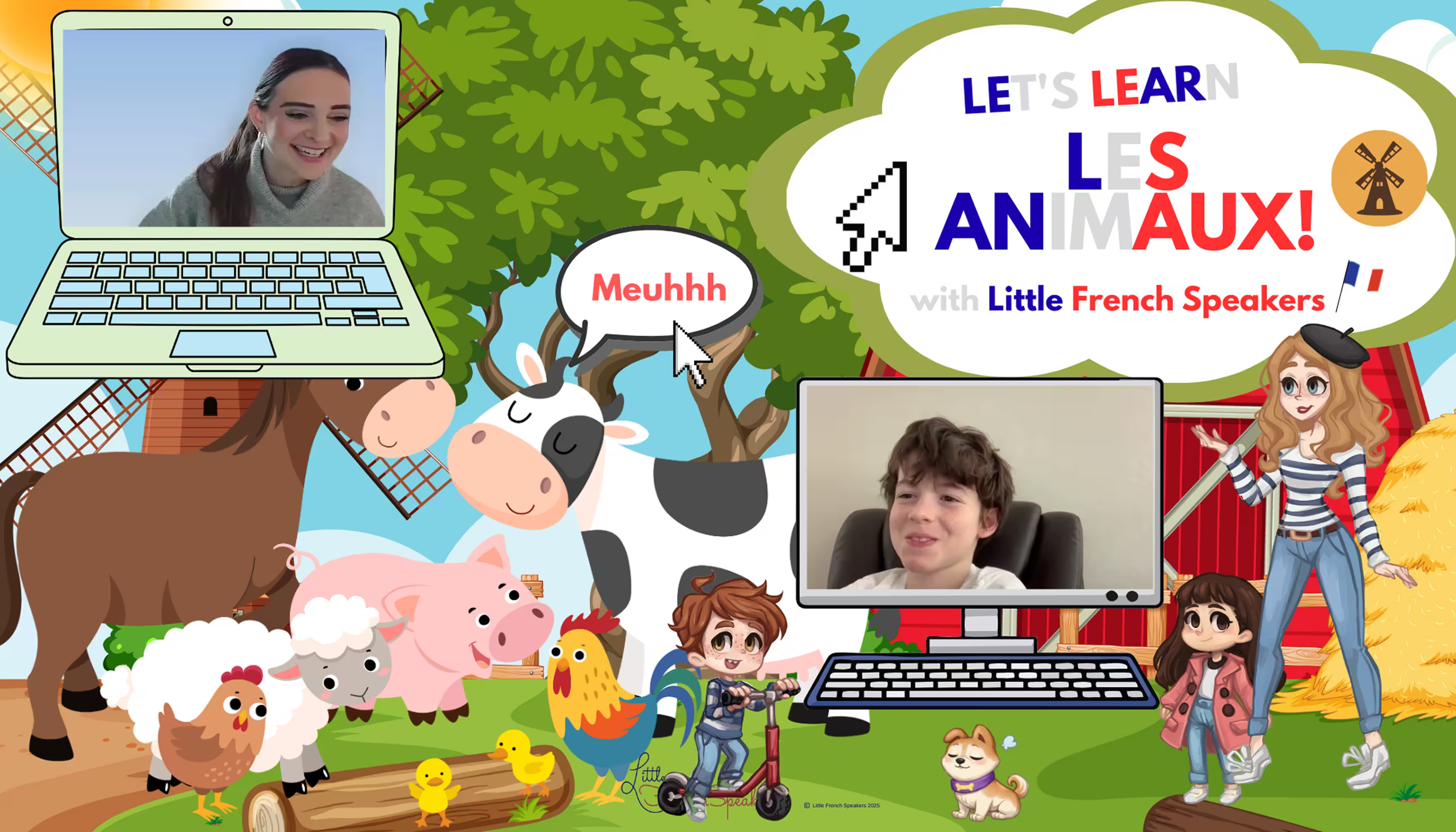
Watch a Real Online French Class for Kids (Animals Vocabulary Lesson)
Curious what online French classes for kids actually look like? Stop wondering. Watch a real lesson.
Discovering French culture
12 Minutes
French Crêpes Tradition: How to Celebrate La Chandeleur with Kids
Learn about La Chandeleur, France's most delicious tradition, and discover how to teach your child French culture through cooking.
Learning French
School life
5 Minutes
How long should your child’s French class be? (15, 25 or 50 min)
Wondering if 15 minutes is really enough to learn, or if 50 minutes might be too tiring for your child? The answer lies in neuroscience: every age has its own optimal 'attention window.' Discover why we adapt our class lengths to your child's biology to ensure rapid progress, without ever causing boredom or frustration.